 The Abyssinian Sand Terrier's head is broad in the skull with a long, tapered muzzle. The eyes are medium and almond shaped, but do not bulge. Their ears are either rose shaped or large and bat like; both are very thin in texture. The nose is usually black, but many Abyssinian Sand Terriers have a nose that is the same color as their coat. Their bite is scissor or level. The neck is arched slightly and gets thicker the closer it gets to the shoulders. The Abyssinian Sand Terrier has a very deep and broad chest, with the depth reaching the elbows. This breed has a level back and a round rump. The tail is low set and tapers to a fine point. This dog has a good reach in its gait and is very well balanced. Abyssinian Sand Terriers are fearless, loyal, and willing to please.
source :
The Abyssinian Sand Terrier's head is broad in the skull with a long, tapered muzzle. The eyes are medium and almond shaped, but do not bulge. Their ears are either rose shaped or large and bat like; both are very thin in texture. The nose is usually black, but many Abyssinian Sand Terriers have a nose that is the same color as their coat. Their bite is scissor or level. The neck is arched slightly and gets thicker the closer it gets to the shoulders. The Abyssinian Sand Terrier has a very deep and broad chest, with the depth reaching the elbows. This breed has a level back and a round rump. The tail is low set and tapers to a fine point. This dog has a good reach in its gait and is very well balanced. Abyssinian Sand Terriers are fearless, loyal, and willing to please.
source :
Showing posts with label Small-sized dogs. Show all posts
Showing posts with label Small-sized dogs. Show all posts
Abyssinian Sand Terrier
The Abyssinian Sand Terrier's head is broad in the skull with a long, tapered muzzle. The eyes are medium and almond shaped, but do not bulge. Their ears are either rose shaped or large and bat like; both are very thin in texture. The nose is usually black, but many Abyssinian Sand Terriers have a nose that is the same color as their coat. Their bite is scissor or level. The neck is arched slightly and gets thicker the closer it gets to the shoulders. The Abyssinian Sand Terrier has a very deep and broad chest, with the depth reaching the elbows. This breed has a level back and a round rump. The tail is low set and tapers to a fine point. This dog has a good reach in its gait and is very well balanced. Abyssinian Sand Terriers are fearless, loyal, and willing to please.
source :
Japanese Chin

Coat and color
The coat is low maintenance, long, and smooth/silky to the touch. They are distinctively black & white and red & white in color and have variations in color intensity (lemon & white, mahogany & white, etc.). As of November 11, 2011, any color not listed in the breed standard is grounds for disqualification in competitions.This breed is considered one of the most cat-like of the dog breeds in attitude: it is alert, intelligent, and independent, and it uses its paws to wash and wipe its face. Other cat-like traits include their preference for resting on high surfaces such as the backs of sofas and chairs, their ability to walk across a coffee table without disturbing an item, and some of the surprising places their owners often find them in. A companion dog, it is loving and loyal to its owner and typically happy to see other people, though a few are distrustful of strangers. Chin prefer familiar surroundings, but do quite well in new situations and are often used as therapy dogs because of this trait and their love of people. Very early socialization of Chin puppies leads to a more emotionally well-balanced Chin that is more accepting of different situations and people.

The Chin will bark for the purpose of alerting the household to the arrival of a visitor or something out of the ordinary, but are otherwise very quiet.
Chin were bred for the purpose of loving and entertaining their people. While typically a calm little dog, they are well known for performing many enjoyable antics such as the "Chin Spin", in which they turn around in rapid circles; dancing on their hind legs while pawing their front feet, clasped together, in the air; and, some even "sing", a noise that can range from a low trill to a higher, almost operatic quality noise, and which sounds much like "woooo".
Health
This breed's flattened face contributes to a few Chin suffering from breathing and heart problems, as is common with brachycephalic breeds. Because they are a brachycephalic breed, temperature extremes (particularly heat) should be avoided. Luxating patellas (knees) and heart murmurs are other genetically predisposed conditions. The oversized eyes are easily scratched and corneal scratches or more serious ulcerations can result. Mild scratches benefit from topical canine antibacterial ointment specifically for eye application; more serious injury or ulcerations require urgent medical care. The Chin, as with most small breed dogs, can also have a risk of hypoglycemia when under the age of 6 months; this concern can continue in Chin that mature at 4 to 5 pounds or less. Some Chin do have seasonal allergies.A UK Kennel Club survey puts their median lifespan at 9.25 years though have been known to live into their 20s.

Care
The Chin's coat requires nothing more than brushing or combing twice every week to maintain its appearance, with special attention being given to the area under the ears and legs and to the skirt; they have no coat odor and do not require frequent bathing. Chin are single-coated and single-hair shedders, much like people, and it is very seldom one will find a Chin with an undercoat. Occasionally, a Chin will have a light blowing of their coat once a year. Without fiber in the diet, they may need to have their anal glands expressed. The oversized eye orbits contribute to moisture about the face and the skin folds in and around the nose and flattened facial area can trap moisture and cause fungal problems. The face should be occasionally wiped with a damp cloth and the folds cleaned with a cotton swab.Diet is an important factor in the health and condition of the Chin, with many Chin being very sensitive or allergic to corn. Maintaining a Chin on a high quality kibble that contains no corn will do much to avoid skin and allergy conditions.
History
Navigating the globe by ship soon changed the way merchants traded their goods: During the fifteenth century, traders from the west arrived by sea using merchant ships. Looking for good will and favorable deals, they always brought gifts for members of the local nobility and government. Included as items of good will were usually a couple of dogs from the native lands - some dogs were large hunters, while others wei of the small lap type. Eventually, these little dogs were crossed with the existing 'pai' dogs, whose roots rested with the caravans of the Silk Road, and other varieties emerged. Countries such as Portugal, Italy, Spain, Holland, England, and later the United States, covered the seas in search of trade and wealth changing the lives of all involved, including the little dogs.
- an early small Japanese dog resembled the old Continental Toy Spaniel of Europe - aristocratic in bearing, square-bodied, up-on-the leg, distinctive long muzzle and luxurious flowing silky coat
- the Chinese Chin was the flat-faced, straight-legged, a bit long-backed, parti-color dog called the Imperial Chin
- these two types were blended together to bring about the Japanese Chin of today dainty, square-bodied, flat-faced, and richly coated, elegant toy breed.
Perry gave his two little canine presents to his daughter, Caroline Perry Belmont, who was married to August Belmont. Their son, August Belmont, Jr., served as President of The American Kennel Club from 1888-1915. According to the Belmont family, the two Chins from Japan - one a dog and the other a bitch - were never bred and died as beloved house pets without issue.
By 1858, a full trade treaty had been negotiated between America and Japan. Thus opening the way for more ships, more gifts. An exodus of the small Imperial dogs soon followed - being given as gifts or sometimes stolen by Palace personnel and then sold to sailors. Additional trading with China and other Asian countries meant that more little dogs soon found their way, officially and otherwise, onto clipper ships and steamers. The long ocean voyage was difficult, arduous and taxing to the small frail dogs. Many perished en route. Their bodies wrapped in silk as they were buried at sea. Those who did survive helped to establish the breed on the Continent, in England and in America. They became not only pets, in castles and palaces throughout the western world, but also beloved treasures for the sailors' wives, mistresses and girlfriends. The Japanese Chin lorded over his environment an cared not whether it was a hundred-and-fifty room palace or a three room cottage: his concern was only that he was considered to be the most important object within and life catered to his every whim.
source : wikipedia
Scottish Terrier
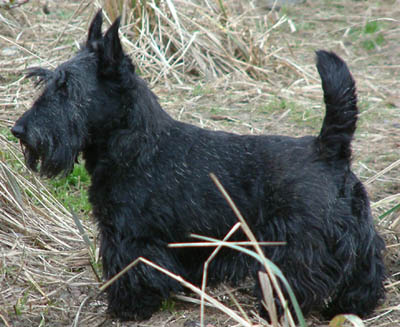
They are a small breed of Terrier with a distinctive shape and have had many roles in popular culture. They have been owned by a variety of celebrities, including the 32nd President of the United States, Franklin Delano Roosevelt, whose Scottie "Fala" is included with FDR in a statue in Washington, DC, as well as the 43rd President George W. Bush. They are also well known for being a playing piece in the board game Monopoly. Described as a territorial, feisty dog, they can make a good watchdog and tend to be very loyal to their family. Healthwise, Scottish Terriers can be more prone to bleeding disorders, joint disorders, autoimmune diseases, allergies, and cancer than some other breeds of dog and there is a condition named after the breed called Scotty cramp. They are also one of the more successful dog breeds at the Westminster Kennel Club Dog Show with a recent best in show in 2010.
Appearance
Height at withers for both genders should be roughly 25 cm (9.8 in), and the length of back from withers to tail is roughly 28 cm (11 in). Generally a well-balanced Scottie dog should weigh from 8.5 to 10 kg (19 to 22 lb) and a female from 8 to 9.5 kg (18 to 21 lb). It is about 10 to 11 inches (25 to 28 cm) in height.
The Scottie typically has a hard, wiry, long, weather-resistant outer coat and a soft dense under coat. The coat is typically trimmed and blended, with a longer coat on the beard, eyebrows, legs and lower body — traditionally shaggy-to-the-ground. The head, ears, tail and back are traditionally trimmed short.
The coat colours range from dark gray to jet black, or 'Brindle' (a mix of black and brown). Scotties with 'Wheaten' (straw to nearly white) coats sometimes occur, but should not be confused with the Soft-Coated Wheaten Terrier or West Highland White Terrier.
Temperament
Scotties are territorial, alert, quick moving and feisty, perhaps even more so than other terrier breeds. The breed is known to be independent and self-assured, playful, intelligent and has been nicknamed the 'Diehard' because of its rugged nature and endless determination. The 'Diehard' nickname was originally given to it in the 19th century by George, the fourth Earl of Dumbarton. The Earl had a famous pack of Scottish Terriers, so brave that they were named “Diehards”. They were supposed to have inspired the name of his Regiment, The Royal Scots, "Dumbarton’s Diehards".Scotties, while being described as very loving, have also been described as stubborn. They are sometimes described as an aloof breed, although it has been noted that they tend to be very loyal to their family and are known to attach themselves to one or two people.
It has been suggested that the Scottish Terrier can make a good watchdog due to its tendency to bark only when necessary and because it is typically reserved with strangers, although this is not always the case. They have been described as a fearless breed that may be aggressive around other dogs unless introduced at an early age. Scottish Terriers were originally bred to hunt and fight badgers. Therefore, the Scottie is prone to dig as well as chase small vermin, such as squirrels, rats, and mice.
Health

Cancer in Scottish Terriers
Scottish Terriers have a greater chance of developing some cancers than other purebreds. According to research by the Veterinary Medical Data Program (1986), six cancers that Scotties appeared to be more at risk for (when compared to other breeds) are: (in descending order) bladder cancer and other transitional cell carcinomas of the lower urinary tract; malignant melanoma; gastric carcinoma; squamous cell carcinoma of the skin; lymphosarcoma and nasal carcinoma. Other cancers that are known to commonly affect Scotties include mast cell sarcoma and hemangiosarcoma.Research has suggested that Scottish Terriers are 20 times more likely to get bladder cancer than other breeds and the most common kind of bladder cancer is transitional cell carcinoma of the bladder (TCC). Dr. Deborah Knapp of Purdue University School of Veterinary Medicine has commented "TCC usually occurs in older dogs (average age 11 years) and is more common in females (2:1 ratio of females to males)." Symptoms of TCC are blood in the urine, straining to urinate, and frequent urination — although owners noticing any of these symptoms should also be aware that the same symptoms may also be indicative of a urinary tract infection.
The most common and effective form of treatment for TCC is Piroxicam, a non-steroidal anti-inflammatory drug that "allows the cancer cells to kill themselves." In order to help prevent cancer in a dog, an owner should ensure that their dog has minimal exposure to herbicides, pesticides, solvents and cigarette smoke; use caution when treating dogs with some flea medications; provide a healthy, vitamin-rich diet (low in carbohydrates, high in vegetables) and plenty of exercise.
Source : wikipedia
Russell Terrier

The Russell Terrier originated in England with Australia being designated as the country of development.
History
The name "Jack Russell Terrier" was never used to describe a breed of dog. Rather, it became a common name for any predominantly-white earth-working terrier after the death of the Reverend John Russell. The only requisite was color, the instinct combined with the will to employ earth-work, and the size to work efficiently underground. Still today, the name is widely used for working terriers of the Parsons Reverend's style. It was in the country of development, Australia, that this 10-12 inch dog was first standardized by Kennel Club recognition with the official name "Jack Russell Terrier" applied to the breed. This ultimately led to recognition of the breed by FCI (Fédération Cynologique Internationale) countries including Ireland and most recently the USA. Unfortunately, due to the previous use of the name in the USA and England, the name Jack Russell Terrier is conflicting. In the USA, a Terrier conforming to the Australian/FCI standard is simply called a Russell Terrier.The Russell Terrier is a very popular companion breed in the US. It must be noted first and foremost the breed is a working breed not a companion breed. They are bred by dedicated Fanciers to preserve their working functional conformation and the instinct to employ their original purpose as earth terriers. This makes them an excellent performance breed participating in a variety of events; natural hunting which includes earthwork, agility, rally, obedience, tracking, go-to-ground, and conformation, just to name a few. They are also found as therapy and service dogs.
Breed development in England and Australia
In the early 1970s, the Jack Russell Terrier Club of Great Britain was formed, and this body instituted a very primitive form of registration. Soon, Jack Russell Terrier Clubs were being formed worldwide, including Australia. The Jack Russell Terrier Club of Australia was formed in 1972 . This national organization set up a particularly comprehensive registration system, along with a formal breed standard. This club also initiated discussions with their KC regarding the possibility of the breed being accepted for registration as a pure breed. The ideal height for the Jack Russell Terrier in Australia was to be 10" to 12".The Russell Terrier in the U.S.A.
The Russell Terrier, also known as the F.C.I. type Jack Russell Terrier is a recognized Kennel Club breed and is maintained separately from the AKC Parson Russell Terrier, and the UKC Parson Russell Terrier. In 2001, the United Kennel Club accepted the application from the English Jack Russell Terrier Club to give dogs in their registry the official "FS" designation. UKC officially recognized the breed as the Russell Terrier because the name Jack Russell Terrier was already in use for the longer legged dog in 2001. The UKC breed standard was changed in 2005 from the original standard of 2001. In 2009 the UKC changed the name to Jack Russsell to go back to their original standard and aligning themselves with the rest of the world . The American Kennel Club AKC accepted the breed into the FSS Program on December 8, 2004 based on the F.C.I. Jack Russell standard also submitted by the E.J.R.T.C. aka the American Russell Terrier Club . The American Rare Breed Association recognized the "Russell Terrier" in 2003, with the old UKC standard originally written by the UKC. This standard was based on the same standard written by Australia and used also in Ireland. The Australian National Kennel Council recognized the breed in 1990 . The original ARBA standard was then changed by the NRTFC to a new standard and different standard in Nov of 2008, than again on Jan 1, 2010.The AKC parent club for the Russell Terrier changed the F C I breed standard in 2010 and introduced their own standard which is now different from the rest of the world and F C I. The NRTFC was the first and is the only organization in the world and history of the breed, to recognize only the Smooth coated dog and create a history different from the rest of the world. The FCI Jack Russell Terrier was accepted into the AKC FSS known as the "Russell Terrier" in December 2004 on the application submitted by the ARTC using the FCI standard. The Parson Russell Terrier, Hunt Terrier and the Jack Russell Terrier/Russell Terrier (Australian/FCI JRT) will forever be linked in ancestry. However, after 15 years of maintaining the Russell Terrier in the US and longer internationally as a distinctly separate breed with the selection of the rectangular appearance unique only to the Jack Russell/Russell Terrier they can no longer be considered variations.Description
- The overall dog is longer than high.
- The depth of the body from the withers to the brisket should equal the length of foreleg from elbows to the ground.
- The girth behind the elbows should be about 40 to 43 cm.
- Temperament
- A lively, alert and active Terrier with a keen, intelligent expression. Bold and fearless, friendly but quietly confident.
- Head
- Skull: The skull should be flat and of moderate width gradually decreasing in width to the eyes and tapering to a wide muzzle.
- Stop: Well defined but not over pronounced.
- Nose: Black.
- Muzzle: The length from the stop to the nose should be slightly shorter than from the stop to the occiput.
- Lips: Tight-fitting and pigmented black.
- Jaws and teeth: Very strong, deep, wide, and powerful. Strong teeth closing to a scissor bite.
- Eyes: Small dark and with keen expression. MUST not be prominent and eyelids should fit closely. The eyelid rims should be pigmented black. Almond shape.
- Ears: Button or dropped of good texture and great mobility.
- Cheeks: The cheek muscles should be well developed.
- Neck: Strong and clean allowing head to be carried with poise.
- Body
- General: Rectangular.
- Back: Level. The length from the withers to the root of tail slightly greater than the height from the withers to the ground.
- Loin: The loin should be short, strong and deeply muscled.
- Chest: Chest deep rather than wide, with good clearance from the ground, enabling the brisket to be located at the height mid-way between the ground and the withers. Ribs should be well sprung from the spine, flattening on the sides so that the girth behind the elbows can be spanned by two hands - about 40 cm to 43 cm.
- Sternum: Point of sternum clearly in front of the point of shoulder.
- Tail: May droop at rest. When moving should be erect and if docked the tip should be on the same level as ears.
- Limbs
- Forequarters
- Shoulders: Well sloped back and not heavily loaded with muscle.
- Upper arm: Of sufficient length and angulation to ensure elbows are set under the body.
- Forelegs: Straight in bone from the elbows to the toes whether viewed from the front or the side.
- Hindquarters: Strong and muscular, balanced in proportion to the shoulder.
- Stifles: Well angulated.
- Hock joints: Low set.
- Rear pastern (Metatarsus): Parallel when viewed from behind while in free standing position.
- Feet: Round, hard, padded, not large, toes moderately arched, turned neither in nor out.
- Gait / Movement
- True, free and springy.
- Coat
- Hair: May be smooth, broken or rough. Must be weatherproof. Coats should not be altered (stripped out) to appear smooth or broken.
- Color: White MUST predominate with black and/or tan markings. The tan markings can be from the lightest tan to the richest tan (chestnut). Terriers exhibiting both black and tan markings (on the predominately white coat) are called tricolored.
- Size and Weight
- Ideal height: 25 cm (10 ins) to 30 cm (12 inches).
- Weight: Being the equivalent of 1 kg to each 5 cm in height, i.e. a 25 cm high dog should weigh approximately 5 kg and a 30 cm high dog should weigh 6 kg.
- Faults
- Lack of true Terrier characteristics.
- Lack of balance, i.e. over exaggeration of any points.
- Sluggish or unsound movement.
- Faulty mouth.
Source : wikipedia
Shih Tzu

Appearance
A small dog with a short muzzle and large dark eyes. With a soft and long double coat, the Shih Tzu stands no more than 26.7 cm (101⁄2 in.) at the withers and with an ideal weight of 4.5 to 7.3 kg (10 to 16 lbs). Drop ears are covered with long fur, and the heavily furred tail is carried curled over the back. The coat may be of any colour, though a blaze of white on the forehead and tip of the tail is frequently seen. The Shih Tzu is slightly longer than tall, and dogs ideally should carry themselves "with distinctly arrogant carriage". A very noticeable feature is the underbite, which is required in the breed standard.The traditional long silky coat, which reaches the floor, requires daily brushing to avoid tangles. Because of their long coat and fast-growing hair, regular grooming is necessary, which may be costly and should be considered when looking at this breed. Often the coat is clipped short to simplify care, in a "puppy clip". For conformation showing the coat must be left in its natural state, though trimming for neatness around the feet and anus is allowed.
History
DNA analysis placed the ancestors of today's Shih Tzu breed in the group of "ancient" breeds indicating "close genetic relationship to wolves". Ludvic von Schulmuth studied the skeletal remains of dogs found in human settlements as long as ten thousand years ago. Another branch coming down from the "Kitchen Midden Dog" gave rise to the Papillon and Long-haired Chihuahua and yet another "Kitchen Midden Dog" branch to the Pug and Shih Tzu.There are various theories of the origins of today's breed. Theories relate that it stemmed from a cross between Pekingese and a Tibetan dog called the Lhasa Apso.Dogs during ancient times were selectively bred and seen in Chinese paintings. The first dogs of the breed were imported into Europe (England and Norway) in 1930, and were classified by the Kennel Club as "Apsos". The first European standard for the breed was written in England in 1935 by the Shih Tzu Club, and the dogs were recategorised as Shih Tzu. The breed spread throughout Europe, and was brought to the United States after World War II, when returning members of the US military brought back dogs from Europe. The Shih Tzu was recognized by the American Kennel Club in 1969 in the Toy Group. The breed is now recognised by all of the major kennel clubs in the English-speaking world. It is also recognised by the Fédération Cynologique Internationale for international competition in Companion and Toy Dog Group, Section 5, Tibetan breeds.
Health
A number of health issues, some of them hereditary, have been found in individual Shih Tzu, and are listed below. There is no data on the percentage of dogs with these ailments.Hypothyroidism
This is a thyroid malfunction that occurs when the thyroid gland stops functioning and producing thyroid hormone responsible for proper metabolism. This malfunction is commonly attributed to immune system problems. It usually affects middle-aged dogs and is seen in all breeds. Symptoms include hair loss, weight gain, muscle loss and lethargy. If left untreated it can result in heart problems. This disease is usually diagnosed through blood tests. It can be effectively treated with drug therapy.Intervertebral Disk Disease
IVD in the dog is a common disorder manifested by acute pain, loss of coordination and paralysis. It commonly occurs in certain breeds of dog called chondrodystrophoid breeds, such as Dachshund, Pekingese, French bulldog, Beagle, Basset Hound, American Cocker spaniel, Shih Tzu, Lhasa Apso and Welsh Corgi.Breathing problems
Shih Tzus have a lot of respiratory problems related to the shape of their face and head (the brachycephalic syndrome) which affects mostly dogs with a short nose (brachycephalic breeds). Owing to an obstruction in the upper airways the dog is forced to laboured breathing. Not every brachycephalic dog will develop respiratory problems but most will to some degree or other. Severe problems may require surgery.Morbidity
Some health issues in the breed are portosystemic shunt of the liver and hip dysplasia in standard sizes. Shih Tzu can also have brain problems, such as cancer, that they are born with. This often shortens the life span. There have been cases of Shih Tzu being epileptic, which in turn also shortens the life span.Mortality
UK Kennel Club survey puts the median life span of a Shih Tzu at 13 years 2 months, with most living between 10 and 16 years.Coat colours
Source : wikipedia
Small Greek Domestic Dog

At one time the Alopekis and Small Greek Domestic Dog were considered to be different types of the same breed. A large number of images on ancient friezes, pottery, and amphorae show this breed as a companion to women and children. Meliteo Kinidio translates to Honey (Small) Dog, probably due to their sweet (like honey) disposition.
Appearance
This breed of dog is of a medium size ranging from approximately 20-25 pounds. They have dropped ears, short snout, long body, with long curved tail. This breed also comes in a large array of colors and combinations of colors, such as; black and tan, blonde, and white. They are not recognized by the American Kennel Club. They are often confused with the Longhaired Dachshund or a Cocker Spaniel mix. Their legs are longer than a Dachshund's which raises their belly and chest much more off the ground. Average height is around 15 inches.Coat
The coat of the Small Greek Domestic Dog is of good quality, and is easy to groom. There are two types of coats for this dog. One is called the longhaired coat, and the other is called the shorthaired coat. The longhaired coat is the most common now and also the most commonly represented type on ancient artifacts. Sometimes, it is slightly wavy, but it should always feel silky. The coat is rich, dense and weatherproof, coming in all colours.Tail
The sickle-shaped tail of the Small Greek Domestic Dog is usually long. The dog holds its tail up high, and has an elegant curve. It is always in motion, showing the dog's joy. The coat of this dog forms a brush under its tail.Eyes
This breed of dog has large eyes which vary in shape from round to more of an almond shape. They are bright, intelligent, and are not deep-set. The color goes with the color of the coat, but they will never be transparent or blue.Muzzle, nose and jaws
The muzzle "tapers easily to the nose", and the topline is level. It is longer than a Cocker Spaniel's, but shorter and more rounded than a Dachshund. The nose of the Small Greek Domestic Dog has well-opened nostrils. It is not too large compared to the muzzle, and it is moist, flat, and level on the front surface. The Small Greek Domestic Dog has strong jaws with scissor-bite teeth.Temperament
The Small Greek Domestic Dog has an even temper and gentle disposition. They are amiable and not generally aggressive or timid. They enjoy company, and although they may initially be standoffish with strangers, they are easily won over. They are very intelligent and are easily trained and famously devoted to their owners. They are very loving and protective. They have a loud, strong bark for their size though they do not bark much.Source : wikipedia
Tibetan Spaniel
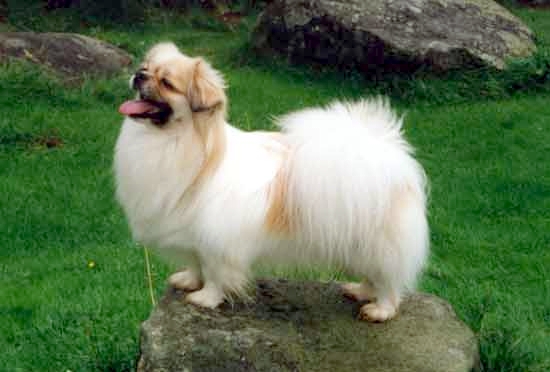
The Tibetan Spaniel has a domed head that is small,in comparison to the body. It has a short blunt muzzle. Teeth meet in an undershot or level bite. The nose is black. The eyes are medium but in keeping with the face and are set wide apart, these are oval in shape. The Tibetan Spaniel does not have extra skin around the eyes and this helps to tell the breed apart from the Pekingese. The ears hang down either side of the head to cheek level and are feathered with a v shape. The neck is covered in a mane of hair, which is more noticeable in the male of the breed. The Tibetan Spaniel's front legs are a little bowed and the feet are hare-like. This dog has a great feathered tail that is set high and is carried over their back. The coat is a silky double coat lying flat and is short and smooth on the face and leg fronts, it is medium in length on the body and has feathering on the ears, toes and tail. The Tibetan Spaniel dog can come in all colours and be solid, shaded and multi-coloured. Colours that are seen are red, fawn, gold, white, cream, black and tan, and black, and often there are white markings on the feet. By show standard this breed grows to about 10 inches and the weight is 9-15 pounds. Slightly larger Tibetan Spaniels can often be found outside the show ring.
Progressive Retinal Atrophy
Progressive retinal atrophy is a problem with this breed. The disease is an inherited form of blindness in dogs that occurs in two forms: generalized PRA and central PRA. Generalized PRA is primarily a photoreceptor disease and is the form found in Tibetan Spaniels. The clinical signs have been observed between 1½ and 4 years, but as late at seven years. The disease is painless and affected dogs become completely blind. Currently there is no treatment, but affected dogs generally adapt well to their progressive blindness.
The earliest clinical sign of progressive retinal atrophy is "night blindness." The dog cannot see well in a dimly lit room or at dusk. The dog will show a reluctance to move from a lighted area into darker surroundings. The night blindness develops progressively into complete blindness. The British institution Animal Health Trust (AHT) is at present intensively researching PRA in Tibetan Spaniels, aiming to isolate the responsible gene.
Liver Shunt - Portosystemic Shunt
A portosystemic shunt is an abnormal vessel that allows blood to bypass the liver, one of the body's filters, so that it is not cleansed. This condition is often referred to as a "liver shunt".Most shunts cause recognizable symptoms by the time a dog is a young adult but are occasionally diagnosed only later in life. Since the severity of the condition can vary widely depending on how much blood flow is diverted past the liver it is possible for a lot of variation in clinical signs and time of onset. Often, this condition is recognized after a puppy fails to grow, allowing early diagnosis. Signs of portosystemic shunts include poor weight gain, sensitivity to sedatives (especially diazepam), depression, pushing the head against a solid object, seizures, weakness, salivation, vomiting, poor appetite, increased drinking and urinating, balance problems and frequent urinary tract disease or early onset of bladder stones. A dramatic increase of these signs after eating is a strong supportive sign of a portosystemic shunt.
Other Issues
Like many breeds of dog, Tibetan Spaniels are susceptible to allergies. They also tend to experience "cherry eye", a prolapsed third eyelid. The shape of a Tibetan Spaniel's face makes them prone to "weeping eye".Source : wikipedia
Toy Fox Terrier

Description
Appearance
Toy Fox Terriers are small dogs with a muscular and athletic appearance. Notable characteristic traits include a short glossy and predominantly white coat, coupled with a predominantly solid head, and a short, high-set tail. The breed has been deemed elegant and graceful with V-shaped ears and large eyes. The tail can be short and straight or long and shiny, and breeders often shorten the tail a few days after birth by clipping it about three-fifth of the way from the tip (at the third or fourth joint). The coat is short, fine, and glossy in black with tan, with areas of tan on the face; there are two other variants, one with 'chocolate' replacing the black in areas (the UKC does not allow this variant to be shown), and another which is all white and tan with no black at all. These variants are often known as 'Tri-Color', 'Chocolate', and 'Tan and White', respectively. The height ranges from 8.5–11.5 inches at the shoulder (21.5–29.2 cm) and weight from 3.5-9 pounds. They are in many ways similar to the Miniature Fox Terrier.Temperament
Toy Fox Terriers, like many active and intelligent breeds, can learn to respond to a number of words. Toy Fox Terriers were used commonly in circus shows by clowns, and they are said to make great companions for owners with a good sense of humor. As a terrier breed, they are often very active, though perhaps not as active as the Jack Russell Terrier, and are said to be well suited for older owners. They are quite trainable and often cited as making wonderful companions for people with disabilities. They are also very lovable and loyal to their owners. In addition, dogs of this breed tend not to bark very much if they are trained well.Grooming
The Toy Fox Terrier is easy to groom, although grooming is generally seen as unneeded due to how short the hairs are (under a centimetre in length most of the time). Sometimes, it is necessary to comb and brush the coat. The hairs shed very frequently.Oral
A Toy Fox Terrier should be given denta-bones or other chewable toys to prevent, as with most small breeds, tartar build-up that can lead to periodontal disease. As well, daily brushing has been shown to be very beneficial as well as regular dental cleanings from the vet.Source : wikipedia
Volpino Italiano
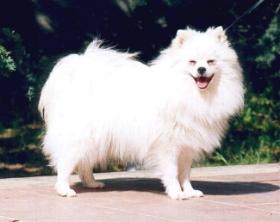
The Volpino has been known and loved by Italian royalty for centuries, being a special favorite of the ladies. Although bearing a strong resemblance to the Pomeranian, the breed is much older and thus has a different background. The northern dogs found their way south very early in the history of domesticated dogs. The Italian word for wolf is lupo, and the Keeshond is called both Lupino and Volpino in Italian. Volpe is Italian for fox, hence volpino means little fox in Italian. Despite his long history, the Volpino is unknown outside of Italy and is now quite rare even in his homeland.
Despite its small size, this dog was originally kept as a guard dog. Its job was to alert the large mastiffs to an intruder. However, due to their lovely temperament and intelligence they also became popular as pets. For unknown reasons the breed's popularity dropped and in 1965 the last dogs were registered. In 1984 an attempt was made to revive the breed. The dogs still living as guard dogs on farms became the new breeding stock. Volpinos remain rare with about 2000 dogs world wide. Most are in Italy but some people are now breeding them in Scandinavia, the UK and the USA. A 2006 survey of kennel clubs found an average of 120 puppies registered each year in Italy (with ENCI) and a total of 200-300 registered each in Sweden, Norway and Finland.
Temperament
The Volpino makes a good watchdog, and some can even be used as gun-dogs (bird dogs) if trained properly. They will make extremely active, affectionate pets.Source : wikipedia
English Cocker Spaniel
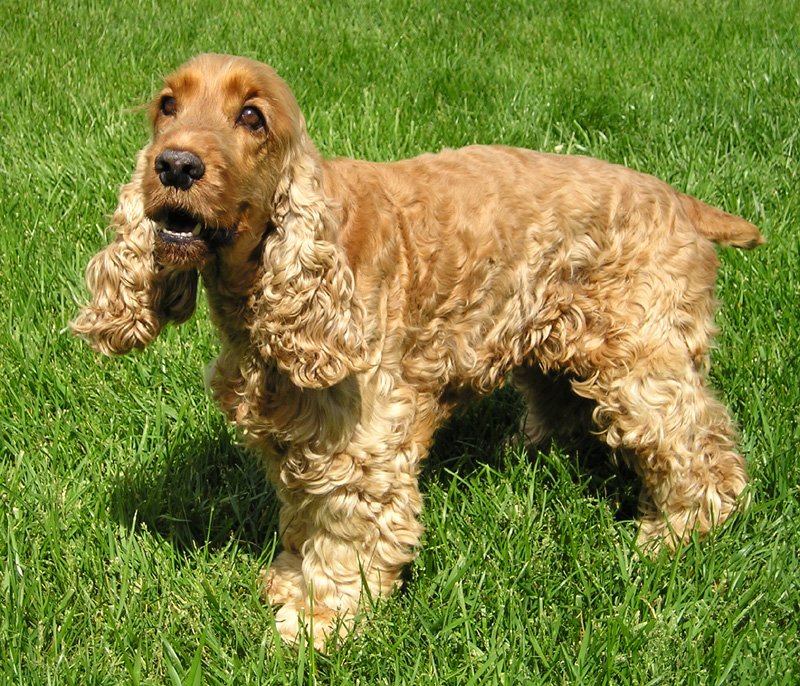
Outside the US, the breed is usually known simply as the Cocker Spaniel, as is the American Cocker Spaniel within the US. Due to the breed's happy disposition and continuously wagging tail, it has been given the cute nickname "merry cocker". They can be also dominant and loyal to their companion. Their health issues are typical for a purebred dog breed; however they are closely associated with rage syndrome even though cases are really quite rare. The word cocker is commonly held to stem from their use to hunt woodcock.
Temperament
The English Cocker Spaniel can be stubborn, but can be easily trained and make a good medium-sized family pet. The breed does not like being alone, and will bond strongly to an individual person in a family. Known for optimism, intelligence and adaptability, the breed is extremely loyal and affectionate. They rank 18th in Stanley Coren's The Intelligence of Dogs, being of excellent working/obedience intelligence.A link between coat colour and temperament has been proposed. This link could be the colour pigment melanin, which is biochemically similar to chemicals that act as transmitters in the brain. A study made by the University of Cambridge involving over 1,000 Cocker Spaniel households throughout Britain concluded that solid colour Cockers were more likely to be aggressive in 12 out of 13 situations. Red/golden Cockers were shown to be the most aggressive of all, in situations involving strangers, family members, while being disciplined, and sometimes for no apparent reason. A study by Spanish researchers at the Autonomous University of Barcelona revealed a similar link between golden Cockers and aggression. Males were also more likely to be aggressive. The study found the English Cocker Spaniel to have the highest level of owner- and stranger- directed aggression compared to other breeds.
Source : wikipedia
Chihuahua

Chihuahua breeders often use terms like Teacup, Pocket Size, Tiny Toy, Miniature or Standard to describe puppies. These terms are not recognized by the breed standards and are considered marketing gimmicks to inflate the value of puppies. Chihuahuas are commonly referred to as either Apple or Deer heads, the former having short noses and rounded heads similar to that of an apple; the latter having longer noses and more elongated heads.
Size
Generally, the height ranges between six and ten inches; however, some dogs grow as tall as 12 to 15 inches (30 to 38 cm). Both British and American breed standards state that a Chihuahua must not weigh more than 6 pounds for conformation.Coat
The Kennel Club in the United Kingdom and the American Kennel Club in the United States recognize only two varieties of Chihuahua: the long-coat, and the smooth-coat, also referred to as short-haired. They are genetically the same breed. The term smooth-coat does not mean that the hair is necessarily smooth, as the hair can range from having a velvet touch to a whiskery feeling. Long-haired Chihuahuas are actually smoother to the touch, having soft, fine guard hairs and a downy undercoat, which gives them their fluffy appearance. Unlike many long-haired breeds, long-haired Chihuahuas require no trimming and minimal grooming. Contrary to popular belief, the long-haired breed also typically sheds less than its short-haired counterparts. It may take up to two or more years before a full long-haired coat develops.
Temperament
A Chihuahua must be chosen with care, as the temperament of its owner can make a difference in the temperament of the pup. Ill tempered Chihuahuas can be easily provoked to attack, and are therefore generally unsuitable for homes with small children. The breed tends to be fiercely loyal to one particular owner and in some cases may become over protective of the person, especially around other people or animals. If properly managed by older children, 13 and up, they can adapt to this kind of living with a dedicated owner. They do not always get along with other breeds, and tend to have a "clannish" nature, often preferring the companionship of other Chihuahuas over other dogs. These traits generally make them unsuitable for households with children that are not patient and calm.Chihuahuas love their dens and will often burrow themselves in pillows, clothes hampers, and blankets. They are often found under the covers or at the bottom of the bed, deep in the dark and safety of what they believe is their den.Health disorders
This breed requires expert veterinary attention in areas such as birthing and dental care. Chihuahuas are also prone to some genetic anomalies, often neurological ones, such as epilepsy and seizure disorders.Chihuahuas, and other toy breeds, are prone to the sometimes painful disease hydrocephalus. It is often diagnosed by the puppy having an abnormally large head, or hydrocephalus, during the first several months of life, but other symptoms are more noticeable since "a large head" is such a broad description. Chihuahua puppies exhibiting hydrocephalus usually have patchy skull plates rather than a solid bone and typically are lethargic and do not grow at the same pace as their siblings. A true case of hydrocephalus can be diagnosed by a veterinarian, though the prognosis is grim.
Chihuahuas have moleras, or a soft spot in their skulls, and they are the only breed of dog to be born with an incomplete skull. The molera fills in with age, but great care needs to be taken during the first six months until the skull is fully formed. Some moleras do not close completely and will require extra care to prevent injury. Many veterinarians are not familiar with Chihuahuas as a breed and mistakenly confuse a molera with hydrocephalus.
Chihuahuas can also be at risk for hypoglycemia, or low blood sugar, which is especially dangerous for puppies. Left unattended, hypoglycemia can lead to coma and death but can be avoided with frequent feedings, such as every three hours for very small or young puppies. Chihuahua owners should have a simple sugar supplement on hand to use in emergencies, such as, Nutri-Cal, Karo syrup or honey. These supplements can be rubbed on the gums and roof of the mouth to rapidly raise the blood sugar level. Signs of hypoglycemia include lethargy, sleepiness, low energy, uncoordinated walking, unfocused eyes and spasms of the neck muscles or head pulling back or to the side.
Chihuahuas are prone to eye infections or eye injury due to their large, round, protruding eyes and their relatively low ground clearance. Care should be taken to prevent visitors or children from poking the eyes. The eyes also water frequently to remove dust or allergens that may get into the eye. Daily wiping will keep the eyes clean and prevent tear staining.
Collapsed trachea (reverse sneezing) is a health concern that is characteristic of the chihuahua breed.
Chihuahuas have a tendency to tremble but it is not a health issue. Instead, it occurs mainly when the dog is stressed, excited or cold. Cold can also present a problem for these small animals. They often enjoy wearing coats or sweaters when outside and enjoy digging and snuggling in blankets when sleeping.
Although figures often vary, as with any breed, the average lifespan range for a healthy Chihuahua is between 10 and 18 years.
Chihuahuas are sometimes picky eaters and care must be taken to provide them with adequate nutrition. Sometimes wet or fresh food can have the most appealing smell to these constant eaters. Chihuahuas are prone to hypoglycemia and could be at a critical state if allowed to go too long without a meal. At the same time, care must be exercised not to overfeed them.
Chihuahuas have a notorious problem with dental issues. Dental care is a must for these little creatures. Human food should be avoided. Due to their small size, even tiny high fat or sugary treats can result in an overweight Chihuahua. Overweight Chihuahuas are susceptible to increased rates of joint injuries, tracheal collapse, chronic bronchitis, and shortened life span.
Chihuahuas are also known for a genetic condition called 'luxating Patella,' a genetic condition that can occur in all dogs. In some dogs, the ridges forming the patellar groove are not shaped correctly and a shallow groove is created. In a dog with shallow grooves, the patella will luxate or slip out of place, sideways. It causes the leg to 'lock up' and will force the chihuahua to hold its foot off the ground. When the patella luxates from the groove of the femur, it usually cannot return to its normal position until the quadriceps muscle relaxes and increases in length, explaining why the affected dog may be forced to hold his leg up for a few minutes or so after the initial displacement. While the muscles are contracted and the patella is luxated from its correct position, the joint is held in the flexed or bent position. The knee cap sliding across the femur can cause some pain due to the bony ridges of the femur. Once out of position, the animal feels no discomfort and continues with activity.
Chihuahuas are also prone to some heart-related disorders, such as heart murmurs and pulmonic stenosis, a condition in which the blood outflow from the heart's right ventricle is obstructed at the pulmonic valve.
Chihuahuas, along with other miniature dogs such as Chinese Cresteds, are prone to physical deformities, especially in old age; several chihuahuas and cross-bred chihuahua/Chinese crested mixes have rated highly in the World's Ugliest Dog Contest, including a purebred chihuahua named Princess Abby (winner of the 2010 contest) and a crossbreed named Yoda (the 2011 winner).
Source : wikipedia
Bolognese

Appearance
The Bolognese is a small, white, compact dog with a distinctive white single coat. It is of small size, stocky and compact. It is of square build and well-muscled. The head is of medium length. The skull is slightly ovoid. The muzzle is large, black and almost square. It has a developed jaw and the upper lips don’t cover the bottom lips. Its lips are black. It has white, strong and evenly aligned teeth. Its eyes are well developed, open and round. The rims of the eyelids are black and the iris is a dark ochre color. The ears are set high and are long and hanging but rigid at the base. The tail is carried curved over the back.The Bolognese's height varies 10.5 to 12 inches for a male and 10-11 inches for a female.The weight varies between 6 to 14 lbs.
Coat
The distinctive single coat (i.e. no undercoat) falls in loose open ringlets/flocks all over the body, with shorter hair on the face. The hair's texture is woolly, as opposed to silky, and is never trimmed or clipped. The hair sheds very little, but requires regular combing to prevent matting.The Bolognese often appears on lists of dogs that allegedly do not shed (moult). However, such lists are misleading. Every hair in the dog coat grows from a hair follicle, which has a cycle of growing, then dying and being replaced by another follicle. When the follicle dies, the hair is shed. The length of time of the growing and shedding cycle varies by age and other factors. "There is no such thing as a non-shedding breed.
The coat requires daily brushings with monthly grooming recommended. Grooming must also include regular bathing, eye and ear hygiene and teeth cleaning.
Temperament
Trademark traits of the Bolognese include: playful, easygoing, earnest, willing, intelligent and loyal. They are very serious and generally not very high energy. They are normally more reserved and shy than the Bichon Frise.The Bolognese is very responsive to obedience training. They are highly intelligent, quick to learn and are easy to train but can be very stubborn when they don’t get their way.
The Bolognese genuinely enjoy companionship of people and forms a close relationship with his owner.They are true companions and thrive on their owner’s attention. They have been known to follow their owners wherever they go. They are friendly with strangers but need to get accustomed to people at a young age. They can be reserved with strangers at first but the response of the owners to the new person greatly influences their behavior towards the individual. Because of this, they are generally friendly towards strangers after the initial meeting. Bolognese are true watchdogs. They are not incessant barkers but are true watchdogs. They take notice of anything unusual and faithfully notify their owners. Bolognese get along well with other dogs but are happy to be the only dog in the family. They are non-aggressive by nature.
Bolognese can be prone to small dog syndrome, human induced behaviors where the dog believes he is pack leader to humans. This can cause behavior programs including separation anxiety and timidity.They do not do well when left alone for long period of time. They may howl mournfully when the owner is busy and cannot pay attention to him.
Health
Life Span
The average life span of the Bolognese is 14 years but they have been known to live up to 18 years. They can live up to 10 years with relatively few genetic health issues. They are known to still act puppy-like at 10 years of age and are able to maintain aspects of youthfulness throughout their lives. They are typically active well into their senior years.Common Health Problems
Bolognese are typically a healthy breed and are not prone to any major problems.Exercise
While Bolognese are perfectly happy to lounge around the house, they should also have a daily walk.Training
Bolognese are easy to train but are quick to bore with numerous repetitive drills. They thrive on variety so it is best to change or expand activities to keep them happily engaged and thinking. They respond well to positive reinforcement, gentle training methods and consistency. They do not respond well to shouting or harshness.Ideal Owners
Ideal owners of Bolognese include families with children, retirees and city dwellers. They are good with children as long as the children are old, mature and responsible enough to handle these dogs gently, carefully and safely. They are not a good choice for younger children who can easily injure small dogs.Source : wikipedia
Bichon Frise
Description
Appearance
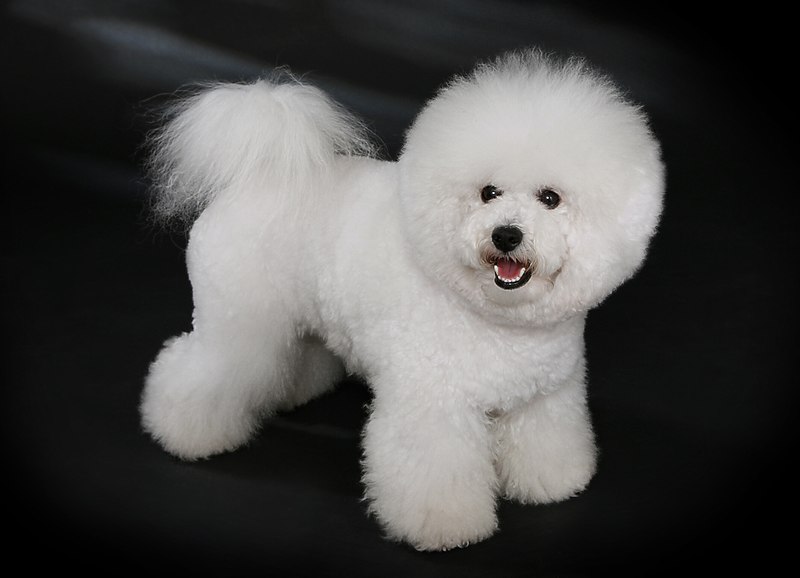
The Bichon Frise is a small dog that weighs approximately 5 – 10 kg (10 - 20 lbs) and stands 23 – 30 cm (9 – 12 in) at the withers, but slightly larger dogs are not uncommon. The skull is slightly rounded and the muzzle is not pointy. The tail is groomed to be long and curly and is carried over the back. It has a black nose and dark round eyes, its white hair consists of a curly and coarse outercoat and a silky and dense undercoat, although many of the breed do tend to have less curly hair than others. A small amount of buff, cream, or apricot color may be seen around its ears, snout, paws or body, but normally these colors do not exceed 10% of its body. Coat colors are solid white, apricot or grey. A white coat is preferred in the show ring. The head and legs are proportionate in size to the body, and the ears and tail are natural (not docked or cropped).The coat is trimmed often to make the hair seem like an even length. Bichon Frises can have a medium-high intelligence.Temperament
The American Kennel Club (AKC) refers to the Bichon Frise as "merry" and "cheerful", and the breed standard calls for a dog that is "gentle mannered, sensitive, playful and affectionate". The Bichon Frise loves human company and demands much of your attention. They are generally very sociable and do well with a family that takes them everywhere. They are charming, affectionate, and intelligent. They do well with children because they are playful and have lots of energy. Bred to be companion dogs, the Bichon Frise tends to get along well with both children and other animals.Bichon Frises are very obedient if training is started early and continued consistently.
Lifespan
Bichon Frise in (combined)UK and USA/Canada surveys had an average life span of about 12–13 years, with Bichon Frises in the UK tending to live longer than Bichon Frises in the US/Canada. This breed's longevity is similar to other breeds of its size, and somewhat longer than purebred dogs in general. The longest lived of 34 deceased Bichons in a 2004 UK survey died at 16.5 years.The oldest Bichon Frises for which there are reliable records in various US/Canada surveys have died at 19 years.
In a 2004 UK Kennel Club survey, the leading causes of Bichon Frise death were old age (23.5%) and cancer (21%). In a 2007 USA/Canada breeders survey, the leading causes of death were cancer (22%), unknown causes (14%), hematologic (11%), and old age (10%). Hematologic causes of death were divided between autoimmune hemolytic anemia (AIHA) and immune-mediated thrombocytopenia (ITP). AIHA and ITP were responsible for the greatest amount of Bichon Frise "years lost." "Years lost" is a measure of the extent to which a condition kills members of a breed prematurely. While cancer is a more common cause of death than AIHA/ITP, Bichon Frises that died of cancer died at a median age of 12.5 years. Hematologic deaths occurred at a median age of only 5 years. Bichon Frises in the UK survey had a lower rate of hematologic deaths (3%) than in the USA/Canada survey (11%).
Bichons are also prone to liver shunts. These often go undetected until later in life, leading to complications that cannot be fixed, and therefore liver failure. Bichons who are underweight, runts of the litter, or have negative reactions to food high in protein are likely to be suffering from a shunt. When detected early, shunt often can be corrected through surgery. However, the later in life the shunt is detected, the lower the likelihood of surgery being a success. Shunts can be kept under control through special diets of low protein and through medications to support liver function, help flush toxins that build up in the kidneys and liver, and control seizures that often occur as a symptom of the shunt. Without surgery, Bichons with shunts on average live to be 4–6 years old. Owners of a smaller than average size bichon must consult a vet. Other symptoms include dark urine, lethargy, loss of appetite, increase in drinking. Seizures come in all forms; episodes of seizures can begin early on but go undetected. Early seizures can appear to be the bichon in a hypnotic state (staring at something not there), or to be experiencing an episode of vertigo, or being drunk. Shunts are a serious condition of smaller breeds, and often not associated with Bichons.
Source : wikipedia
Alaskan Klee Kai

Appearance
The Alaskan Klee Kai should look like a miniature husky. Although their standard is based on that of the Siberian Husky, there are physical differences, such as a shorter muzzle, larger ears, and higher tail set, that make them easily distinguishable from the Siberian.They come in three sizes based on their height:
- Toy size Alaskan Klee Kai are up to and including 33 cm (13 inches).
- Miniature Alaskan Klee Kai are over 33 cm high and up to 38 cm (15 inches) high.
- Standard Alaskan Klee Kai are over 38 cm high and up to 43 cm (17 inches) high.
- Serious Fault - Any Alaskan Klee Kai over 43 cm and up to 44,5 cm (17½ inches).
- Eliminating Fault* - Any Alaskan Klee Kai over 44,5 cm.
Alaskan Klee Kai come in three recognized color varieties: black and white, gray and white, or red and white (which may appear as a cinnamon or a dark auburn). Solid white Alaskan Klee Kai also exist but this coat color variety is considered a disqualification by the breed standard. Solid white Alaskan Klee Kai are not recognized by the UKC and may not be registered.
There are also two coat types found in the Alaskan Klee Kai breed. These consist of the standard and full-coated varieties. Both are recognized by the UKC and equally acceptable by the breed standard. The only exception being that the coat length may not be so long as to obscure the outline of the dog, which is considered a breed fault.
Coat and Grooming

A rare red-colored Alaskan Klee Kai
As in Siberians and unlike short haired dogs who shed all year long, the Klee Kai blows its coat twice a year. Of course, the size of the dogs limits the amount of fur blown. It is best to groom the dog on a regular basis during this time. Some of the longer haired dogs can become matted if not groomed. Most Klee Kai will assist the loss of hair by rubbing against things such as fences.
Other than this period of blowing coat, the Klee Kai is very self sufficient. The normal preventative measures should be taken, such as trimming of nails, normal grooming in the form of brushing. This process is especially important in the bonding process.
Temperament
The Alaskan Klee Kai is a highly intelligent, curious and active breed. Unlike Siberian Huskies, whom they closely resemble, Alaskan Klee Kai are typically standoffish and cautious around unfamiliar individuals, which causes them to excel as watchdogs. Because of their inherently reserved disposition in the presence of strangers, continual socialization throughout an Alaskan Klee Kai's life is highly encouraged. They are moderately active and have a strong prey drive. This means unless they are properly introduced and raised with smaller animals such as rabbits, hamsters, cats and birds, they will hunt and kill them. They can be a great family dog if raised with children who are careful with animals. Alaskan Klee Kai are not likely to tolerate being mistreated (poked at, pinched, bullied) by children and may respond by nipping them, unlike the Siberian Husky which are considered good with children. Even so, they make great pets. Because of their intelligence they do well in obedience classes and have a high drive to please their owners which helps them to excel in this area as well as many other types of activities. Another such activity is agility in which the AKK almost seems to have been bred to take part in. If you have an Alaskan Klee Kai that is highly active, this is a great way to help them use some of that up.
Source : wikipedia
Affenpinscher
Dogs of the Affenpinscher type have been known since about 1600 but these were somewhat larger, about 12 to 13 inches, and came in colors of gray, fawn, black and tan, gray and tan, and also red. White feet and chest were also common. The breed was created to be a ratter, working to remove rodents from kitchens, granaries, and stables.
Description
Appearance
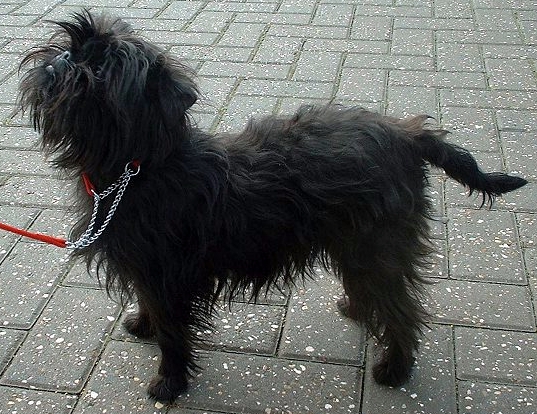
An Affenpinscher generally weighs 6.5 to 13.2 pounds (2.9 to 6.0 kg) and stands 9 to 12 inches (23 to 30 cm) tall at the withers. It has a harsh rough coat when it is not groomed and if groomed soft and fluffy, and a monkey-like expression (Affe means monkey in German). Its coat is shaggier over the head and shoulders forming a mane, with shorter coat over the back and hind quarters. It is harsh and wiry in texture. The FCI and KC breed standards specifies that the coat must be black, but the AKC also allows gray, silver, red, black and tan, and belge (a mixture of red, brown, black and white hairs); other clubs have their own lists of acceptable colours, with black being the preference. The Affenpinscher has a shaggy, wiry-type coat.Temperament
Affenpinschers have a distinct appearance that some associate with terriers. They are different from terriers, however, in that they are actually part of the pinscher-schnauzer of group 2 in the FCI classification and so often get along with other dogs and pets. They are active, adventurous, curious, and stubborn, but they are also fun-loving and playful. The breed is confident, lively, affectionate towards family members and is also very protective of them. This loyal little dog enjoys being with its family. It needs consistent, firm training because some can be quite difficult to housebreak. The training should be varied because the dog can easily become bored. The affenpinscher has a terrier like personality.Affenpinschers are somewhat territorial when it comes to their toys and food, so they are not recommended for very small children. This dog is mostly quiet but can become very excited if attacked or threatened and shows no fear toward any aggressor. It is best suited for a family who likes a show and has a sense of humor.
| Traits | ||
|---|---|---|
| Weight | 6.5–13.2 lb (2.9–6.0 kg) | |
| Height | 9–12 in (23–30 cm) | |
| Coat | Wire | |
| Color | Black, grey, silver, red, black and tan, or belge (mixed black, white, brown and red hairs), all with or without black mask | |
| Litter size | 2–3 puppies | |
| Life span | 11–14 years | |
Source : wikipedia
Basset Hound
Appearance
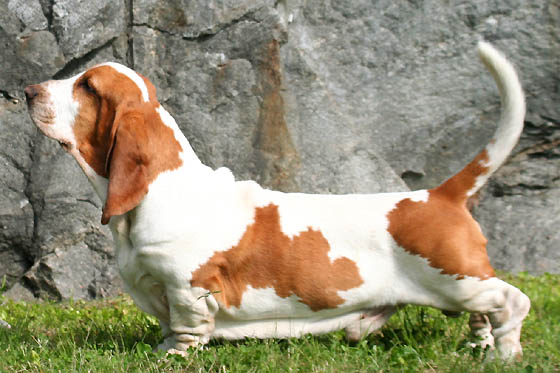
Bassets are large, short, solid and long, with curved sabre tails held high over their long backs. Everett Millais, founder of the modern Basset Hound, is quoted as saying "Oh, he's about 4 feet long and 12 inches high." in reference to his French basset. An adult dog weighs between 20 and 35 kilograms (44 and 77 lb). This breed, like its ancestor the Bloodhound, is known for its hanging skin structure, which causes the face to occasionally look sad; this, for many people, adds to the breed's charm. The dewlap, seen as the loose, elastic skin around the neck, and the trailing ears which along with the Bloodhound are the longest of any breed, help trap the scent of what they are tracking. Its neck is wider than its head. This combined with the loose skin around its face and neck means that flat collars can easily be pulled off. The previous FCI standard described the characteristic skin of the Basset, which resembles its ancestor the Bloodhound as "loose". This wording has since been updated to "supple and elastic".The looseness of the skin results in the Basset's characteristic facial wrinkles. The Basset's skull is characterised by its large Dolichocephalic nose, which is second only to the Bloodhound in scenting ability and number of olfactory receptor cells.
Coat
The short-haired coat of a Basset is long, smooth and soft, and sheds constantly. Any hound coloration is acceptable, but this varies from country to country. They are usually Black, Tan and White tricolors or Tan and White bicolors. Tan can vary from reddish-brown and Red to Lemon. Lemon and White is less common color. Some Bassets are also classified as gray or blue - this colour is considered rare and undesirable.They usually have a clearly defined white blaze and a white tip to their tail, intended to aid hunters in finding their dogs when tracking through underbrush.
Source : wikipedia
Subscribe to:
Posts (Atom)